As a parent who’s navigated the costly world of baby gear, I’ve discovered that buying secondhand items can save thousands without compromising quality. From strollers to cribs, gently used baby equipment offers incredible value while helping the environment.
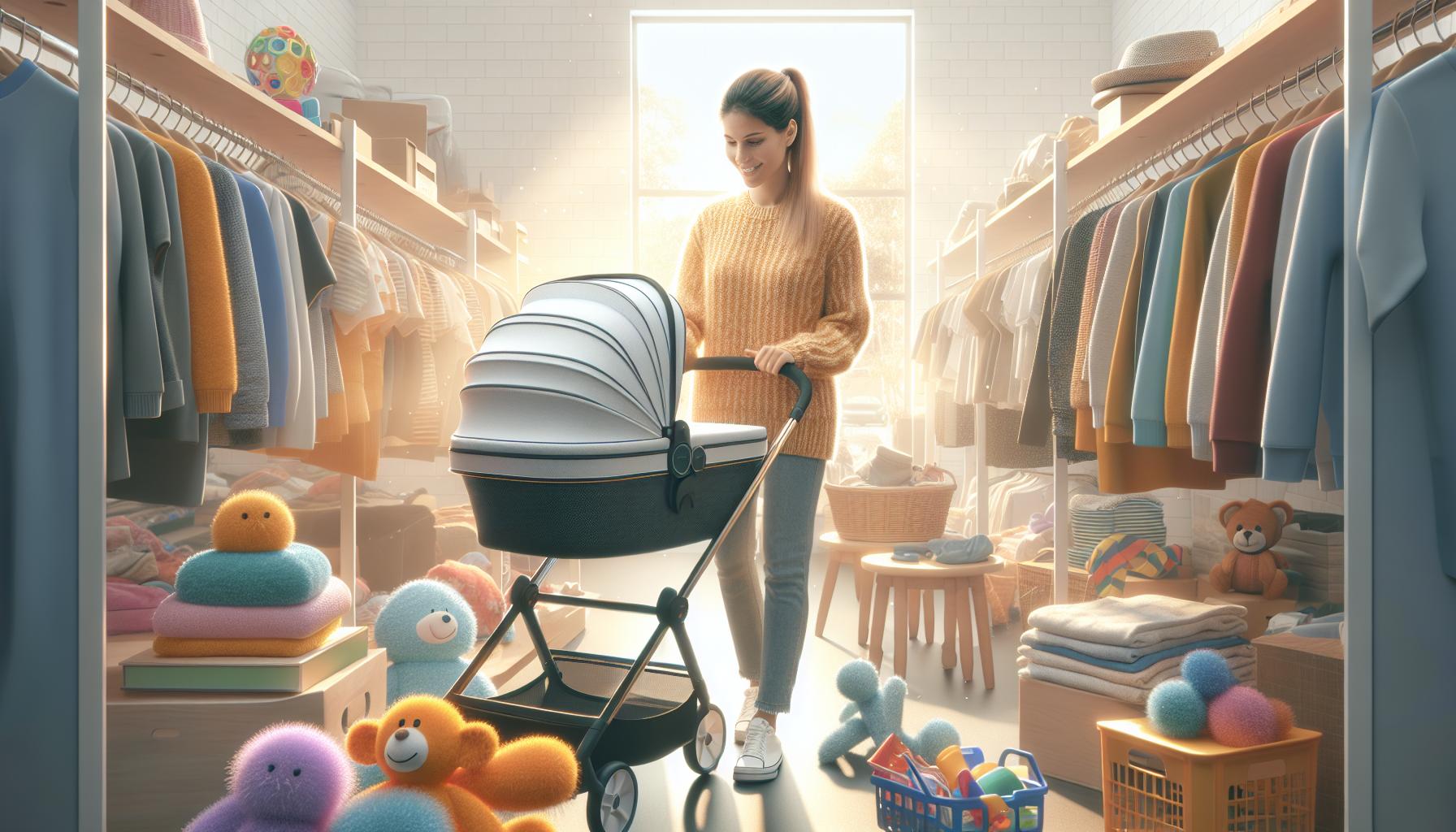
I’ll never forget scoring a pristine Uppababy stroller for 60% off retail price and realizing how much money I could save by shopping smart. The secondhand baby gear market has exploded in recent years with parents seeking sustainable and budget-friendly options for their little ones. Through marketplace apps, consignment shops and local parent groups, finding quality pre-loved items has never been easier.
Key Takeaways
- Buying secondhand baby gear can save parents 40-70% on essential items while helping reduce environmental waste and carbon emissions
- While many items are safe to buy used, certain safety-critical equipment like car seats, breast pumps, and crib mattresses should always be purchased new
- Top sources for quality used baby items include online marketplaces (Facebook, Mercari), local consignment shops, and parent-to-parent community sales
- Always inspect used items thoroughly for recalls, damage, and proper functionality before purchasing, using the CPSC database to verify product safety
- Proper cleaning and sanitizing of secondhand items is essential – use appropriate disinfection methods based on material type (hard surfaces, fabrics, etc.)
Benefits of Buying Secondhand Baby Gear
Purchasing pre-owned baby gear offers multiple advantages beyond the initial cost savings. I’ve discovered that making strategic choices about secondhand items creates both immediate and long-term benefits.
Cost Savings for Parents
Parents save 40-70% on essential baby items through secondhand purchases. I’ve found premium brands like Snoo bassinets selling for $600-800 used compared to their $1,695 retail price. Here’s a breakdown of typical savings:
| Item Category | Average Retail Price | Average Secondhand Price | Typical Savings |
|---|---|---|---|
| Strollers | $800 | $320 | 60% |
| Car Seats | $350 | $140 | 60% |
| High Chairs | $250 | $100 | 60% |
| Baby Carriers | $180 | $72 | 60% |
Environmental Impact
Buying secondhand baby gear reduces landfill waste by 30% for infant products. Each reused item prevents:
- Production of 5.6kg of carbon emissions
- Consumption of 45 gallons of water
- Use of synthetic materials like plastics
- Generation of packaging waste
- Transportation emissions from manufacturing to retail
- Local marketplace exchanges
- Consignment shop resales
- Parent-to-parent community sales
- Online resale platforms
Best Places to Find Used Baby Items
I’ve discovered multiple reliable sources for purchasing quality secondhand baby gear at significant discounts. These marketplaces offer verified sellers secure transactions with comprehensive product details.
Online Marketplaces
Leading digital platforms connect parents selling gently used baby items with potential buyers:
- Facebook Marketplace: Features local listings with direct messaging instant communication between buyers sellers
- Mercari: Offers secure payments tracked shipping specialized baby gear categories
- OfferUp: Includes detailed item photos in-app messaging rating system for sellers
- Kidizen: Specializes in children’s items with authenticated seller profiles size-specific search filters
- Poshmark: Provides brand authentication for luxury items protected purchases buyer guarantee
| Platform | Average Savings | Shipping Options | Payment Protection |
|---|---|---|---|
| Facebook Marketplace | 50-70% | Local pickup | Limited |
| Mercari | 40-60% | Nationwide | Full |
| OfferUp | 45-65% | Both | Full |
| Kidizen | 35-55% | Nationwide | Full |
| Poshmark | 30-50% | Nationwide | Full |
- Once Upon A Child: Features standardized pricing organized departments seasonal rotation
- Kid to Kid: Implements strict quality checks branded item authentication current safety standards
- Children’s Orchard: Provides loyalty programs frequent buyer discounts curated collections
- Local boutique consignments: Offer personalized shopping assistance community-focused exchanges premium brands
- Seasonal consignment events: Include large-scale pop-up sales multiple vendors concentrated shopping experience
| Store Type | Quality Check | Price Range | Return Policy |
|---|---|---|---|
| Chain Stores | Standard | 30-50% off retail | 7-14 days |
| Boutiques | Premium | 25-45% off retail | Store credit |
| Pop-up Events | Varied | 40-70% off retail | Final sale |
What Baby Items Are Safe to Buy Used
Safety remains the top priority when purchasing secondhand baby items, with specific categories offering better value without compromising well-being. Here’s a detailed breakdown of safe secondhand options across major categories:
Furniture and Equipment
- Solid wood furniture: Wooden cribs, dressers, changing tables manufactured after 2011 meet current safety standards
- Play equipment: Activity centers, ExerSaucers, bouncers with intact straps, springs, fasteners
- High chairs: Models with secure 5-point harnesses, sturdy frames, working buckles
- Bassinets: Units with firm, flat mattresses, stable bases, breathable sides
- Baby monitors: Digital models with clear audio/video, functioning parent units, reliable battery life
- Baby carriers: Structured carriers, wraps, slings without fabric wear, functioning buckles or clasps
Avoid: Drop-side cribs, recalled furniture models, items with loose parts or broken safety features
- Everyday wear: Onesies, sleepers, pants, shirts in good condition
- Special occasion outfits: Holiday clothing, formal wear worn minimally
- Winter gear: Coats, snowsuits, boots with working zippers, intact insulation
- Accessories: Bibs, burp cloths, blankets made from washable materials
- Shoes: Pre-walker shoes, early walker shoes with minimal sole wear
- Cloth diapers: All-in-ones, pocket diapers, covers with intact elastic, snaps
- Items must be washable at high temperatures
- No stains, tears or compromised elastic
- Working closures (zippers, snaps, buttons)
- Original shape retention
Items to Avoid Buying Secondhand
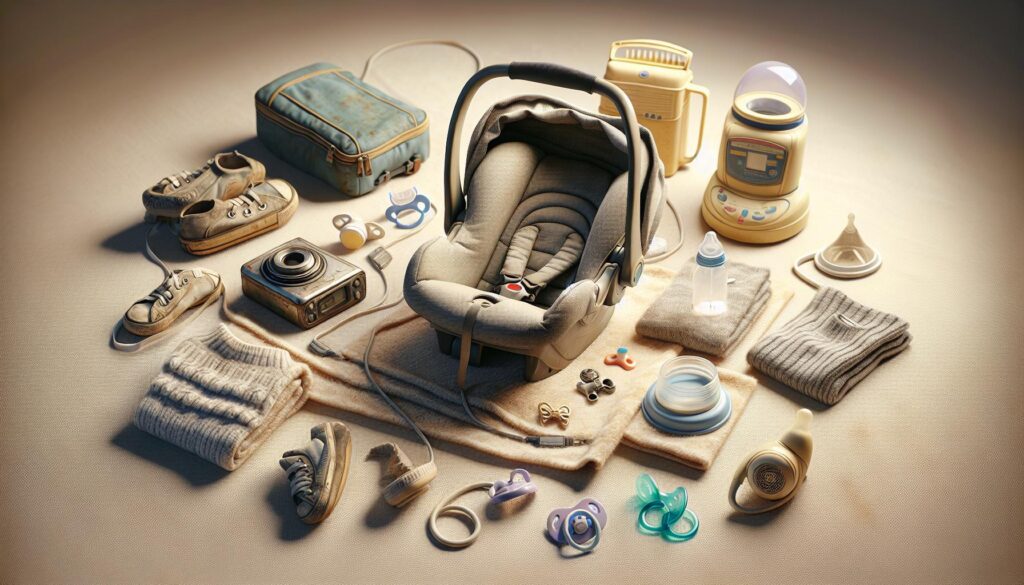
Certain baby items pose safety risks when purchased secondhand due to hygiene concerns or potential hidden damage. Here’s a comprehensive breakdown of items to skip in the secondhand market.
Safety-Critical Equipment
Safety equipment requires pristine condition to protect infants effectively:
- Car seats with expired manufacturing dates or unknown crash histories
- Breast pumps with internal motors that can harbor bacteria
- Drop-side cribs banned by the Consumer Product Safety Commission
- Recalled baby equipment including walkers or outdated safety restraints
- Helmets with compressed padding or previous impact damage
- Life jackets with worn straps or compromised flotation materials
- Bottle nipples exposed to bacterial growth
- Pacifiers with deteriorated materials
- Bath items containing mold or mildew
- Teething toys with bite marks or worn surfaces
- Toiletries past expiration dates
- Used mattresses with potential bed bugs or dust mites
- Breast pump parts touching milk
- Diaper pails retaining odors or bacteria
| Item Category | Safety Risk | Average Lifespan |
|---|---|---|
| Car Seats | Structural integrity | 6-10 years |
| Breast Pumps | Bacterial growth | Single user |
| Crib Mattresses | Contamination | 5 years |
| Bottle Nipples | Material breakdown | 3 months |
| Pacifiers | Deterioration | 2 months |
Tips for Inspecting Used Baby Gear
I prioritize thorough inspection of secondhand baby items to ensure safety and functionality before purchasing. These essential checks protect both my investment and my baby’s wellbeing.
Checking for Recalls
I check every used baby item against the Consumer Product Safety Commission (CPSC) database for active recalls. Here’s my process:
- Note the brand name model number serial number from the product label
- Search the CPSC website using these specific identifiers
- Download the SaferProducts mobile app for instant recall verification
- Contact manufacturers directly with product registration numbers
- Review recall dates expiration timelines for items like car seats bassinets
- Check all fasteners screws bolts for secure attachment
- Test latches buckles straps for smooth operation
- Inspect fabric surfaces for tears stains mold
- Verify moving parts operate without squeaks grinding
- Examine corners edges for chips cracks sharp points
- Test stability on flat surfaces
- Smell items for smoke chemical odors
- Count all parts pieces against original manual
| Item Type | Critical Inspection Points | Red Flags |
|---|---|---|
| Strollers | Frame integrity wheels brakes | Rust loose wheels stuck folding mechanism |
| High Chairs | Harness tray stability | Cracked plastic missing restraints |
| Pack n Plays | Mesh integrity locking mechanisms | Tears loose stitching bent frames |
| Baby Carriers | Strap integrity buckle function | Frayed seams broken clasps |
| Bassinets | Mattress support stability | Unstable base mattress gaps |
How to Clean and Sanitize Secondhand Items
Initial Cleaning Process
I start every cleaning process by removing loose dirt with a vacuum or dry brush. For fabric items, I shake them outdoors to remove dust particles before proceeding with deeper cleaning methods. A mixture of warm water with mild soap effectively removes surface grime from most baby items.
Disinfecting Hard Surfaces
Hard surfaces require specific cleaning approaches:
- Spray non-porous surfaces with a 70% isopropyl alcohol solution
- Clean plastic toys in a 1:10 bleach-water solution for 2 minutes
- Use hydrogen peroxide wipes on metal components
- Sanitize wooden items with a vinegar-water solution (1:1 ratio)
Fabric Care Instructions
Different fabrics demand specialized cleaning methods:
- Machine wash removable fabric covers at 140°F (60°C)
- Steam clean non-removable upholstery at 212°F (100°C)
- Sun-dry items outdoors for natural UV disinfection
- Use an enzymatic cleaner for organic stains
Sanitizing Equipment Components
Baby gear with multiple parts requires thorough attention:
- Disassemble items completely before cleaning
- Soak small parts in hot soapy water for 15 minutes
- Clean crevices with cotton swabs dipped in rubbing alcohol
- Air dry all components fully before reassembly
Storage Before Use
Proper storage ensures items remain clean:
- Store sanitized items in sealed plastic bags
- Keep cleaned gear in a dry space with 40-50% humidity
- Place silica gel packets with stored fabric items
- Label containers with cleaning date for reference
- Test cleaning solutions on small areas first
- Avoid harsh chemicals on items that contact baby’s mouth
- Document manufacturing dates before cleaning
- Maintain proper ventilation while using cleaning products
| Item Type | Recommended Cleaning Method | Drying Time |
|---|---|---|
| Hard Plastic | Bleach solution (1:10) | 2-3 hours |
| Fabric | Hot water wash (140°F) | 4-6 hours |
| Wood | Vinegar solution (1:1) | 24 hours |
| Metal | 70% alcohol spray | 30 minutes |
| Electronics | Sanitizing wipes | 1 hour |
Shopping for secondhand baby gear has transformed how I approach preparing for a baby. I’ve discovered it’s not just about saving money – though the 40-70% discounts are incredible. It’s about making smart sustainable choices that benefit both our wallet and the planet.
From my experience navigating the secondhand market I’ve learned that with proper research thorough inspections and careful cleaning practices used baby items can be just as safe and functional as new ones. Whether through online marketplaces local consignment shops or parent groups there are plenty of reliable options for finding quality pre-loved baby gear.
The key is knowing what items are safe to buy used being diligent about safety checks and understanding how to properly clean and maintain secondhand gear. By following these guidelines you’ll be well-equipped to make informed decisions that protect both your baby and your budget.